Toddler Development: What Really Changes Between 1 and 3 Years (And Why It Often Feels So Intense)
The period between one and three years of age is one of the most dramatic phases of human development. Children change rapidly during this time, not just in size and skills, but in personality, independence, and emotional expression. Many parents feel surprised by how intense toddlerhood can be, even when the child is healthy and developing normally.
Understanding what actually changes during these years helps parents respond with patience rather than confusion. Toddler development is not chaotic or random. It follows a clear pattern, even though every child moves through it in their own way.
Why toddlerhood feels so different from babyhood
Babies depend almost entirely on adults for movement, communication, and regulation. Toddlers, on the other hand, are learning to do things on their own while still needing support. This creates tension between independence and dependence.
Between one and three years, children begin to:
- Move freely and explore independently
- Develop a sense of self
- Communicate preferences and refusals
- Test boundaries
- Experience strong emotions without the ability to regulate them
This combination explains why toddlerhood often feels emotionally intense for both the child and the parent.
Physical development from 1 to 3 years
Physical growth slows compared to infancy, but skill development accelerates.
Between one and three years, most toddlers:
- Improve balance and coordination
- Move from walking to running, climbing, and jumping
- Develop fine motor skills such as stacking, scribbling, and feeding themselves
- Gain better control over hand movements
Because growth slows, appetite may also decrease. This often worries parents, but it is a normal shift that reflects reduced calorie needs compared to infancy.
Physical exploration is central to toddler learning. Movement is how toddlers understand the world.
Brain development and learning
The toddler brain is undergoing rapid development. Neural connections are forming at a fast pace, especially in areas related to language, memory, and emotional processing.
Toddlers learn through:
- Repetition
- Observation
- Trial and error
- Sensory experiences
They may repeat the same activity or word many times. This is not boredom or obsession. It is how the brain strengthens connections.
Learning at this stage is not academic. It is experiential.
Language development and communication changes
Language development is one of the most visible changes between one and three years.
Early in this phase, toddlers may:
- Use a few words or sounds
- Rely heavily on gestures
- Understand more than they can express
As they approach age two and beyond:
- Vocabulary expands rapidly
- Simple sentences begin forming
- Understanding of instructions improves
Frustration often increases when toddlers understand more than they can say. Tantrums sometimes reflect communication overload rather than defiance.
Language development varies widely. Some children speak early, others later. Understanding and engagement are just as important as spoken words.
Emotional development and big feelings
Toddlers experience emotions intensely but lack the skills to manage them. Their emotional brain develops faster than their ability to regulate responses.
Common emotional experiences include:
- Sudden mood changes
- Strong attachment to caregivers
- Separation anxiety
- Frustration when desires are blocked
- Difficulty waiting or sharing
Toddlers are not trying to manipulate or misbehave. They are learning how emotions work and how the world responds to them.
Emotional outbursts are a sign of development, not failure.
The rise of independence and “no”
One of the most noticeable changes in toddlerhood is the desire for independence.
Children between one and three years begin to:
- Assert preferences
- Resist instructions
- Say “no” frequently
- Want to do tasks themselves
This behavior is a developmental milestone. It reflects a growing sense of identity and autonomy.
While it can be challenging, allowing safe independence supports confidence and self-trust.
Social development and relationships
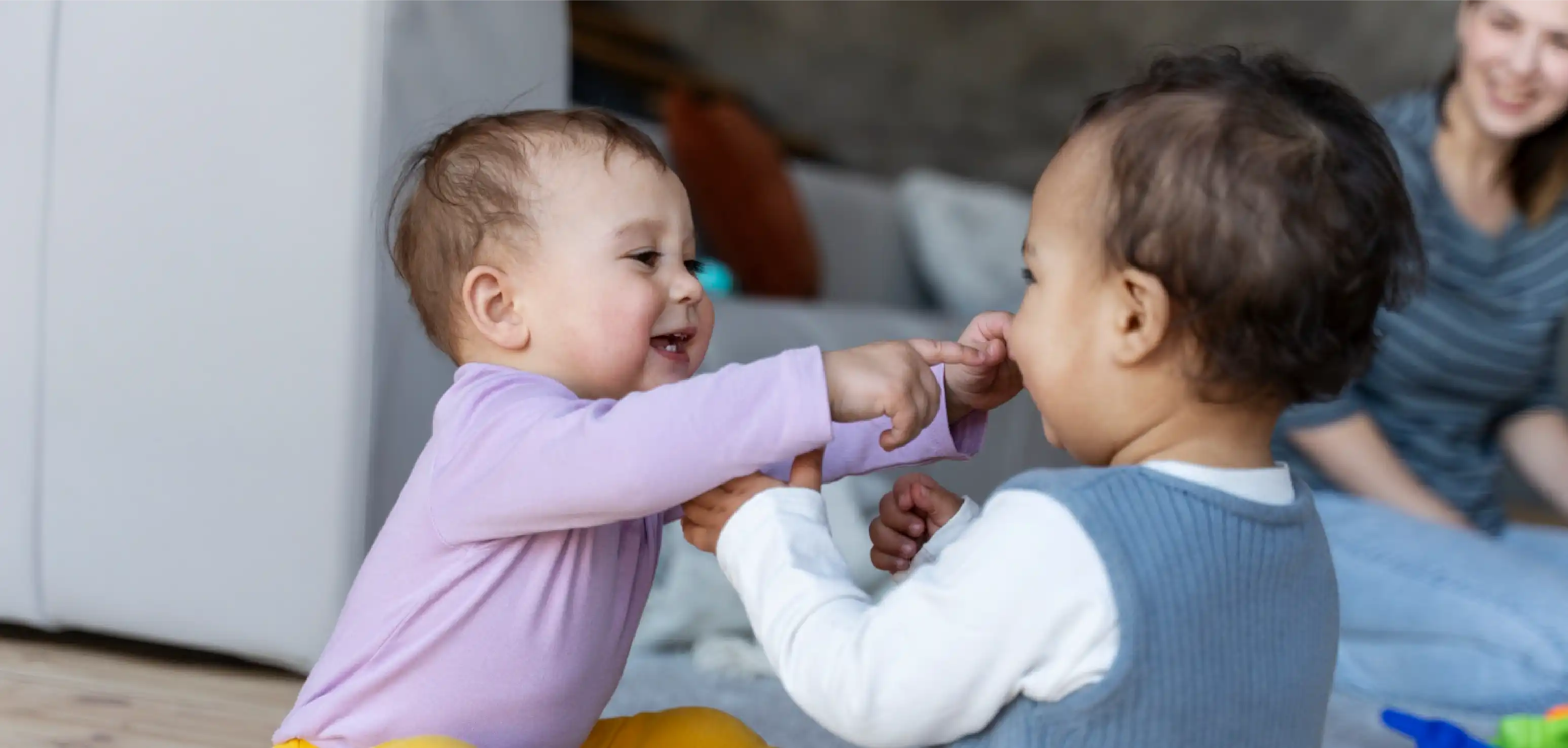
Toddlers are learning how to exist in social spaces, but they are not yet capable of true cooperation or sharing.
During this phase:
- Parallel play is common, where children play side by side rather than together
- Possessiveness over toys is normal
- Empathy begins to emerge gradually
Expecting toddlers to share consistently or manage social conflict independently often leads to frustration for both child and parent.
Social skills are learned over time through modeling, guidance, and repetition.
Sleep changes during toddlerhood
Sleep patterns often change between one and three years.
Some toddlers:
- Transition from two naps to one
- Resist bedtime due to increased awareness
- Experience sleep regressions during developmental leaps
Sleep resistance is not always defiance. It often reflects excitement, fear of separation, or overstimulation.
Consistent routines help provide predictability in a rapidly changing world.
Behaviour that often worries parents
Many behaviors that concern parents are developmentally normal in toddlerhood.
These include:
- Tantrums
- Picky eating
- Clinginess
- Testing limits
- Sudden fears
While these behaviors can be exhausting, they usually reflect growth, not problems. Responding calmly and consistently supports long-term emotional regulation.
When development varies
Development between one and three years does not follow a strict timeline. Some children walk early but speak later. Others speak early but are cautious physically.
Variation is normal.
What matters more than exact timing is:
- Steady progress over time
- Engagement with caregivers
- Responsiveness to the environment
Comparisons with other children often increase anxiety without providing useful insight.
Supporting toddler development without pressure
The most supportive environment for toddlers is one that combines safety, consistency, and emotional presence.
Helpful approaches include:
- Offering choices within limits
- Keeping routines predictable
- Responding to emotions without punishment
- Modeling calm behavior
- Encouraging exploration while maintaining boundaries
Toddlers thrive when they feel safe enough to explore and supported enough to return.
The role of the parent during toddlerhood
Parents are not meant to control toddler behavior perfectly. They are meant to guide, protect, and connect.
Toddlerhood tests patience because it mirrors growth in real time. Each challenge reflects a new skill emerging beneath the surface.
This phase is not about fixing behavior. It is about supporting development.
A grounded perspective
Between one and three years, children are learning how to be human. They are discovering movement, language, emotions, and independence all at once. This is demanding work.
Toddler behavior often feels intense because development is intense.
When parents understand what is changing beneath the surface, they can respond with confidence instead of doubt. Progress does not look like calm obedience. It looks like curiosity, emotion, resistance, and growth.
Toddlerhood is not something to survive. It is something to understand, support, and walk through with patience and perspective.