Why Play Is Essential for Baby Brain Development: How Simple Interactions Shape a Child’s Mind
Play may look simple from the outside, but inside a baby’s brain, it is powerful work. Every smile exchanged, every object explored, every sound repeated is shaping how the brain grows and connects. Long before a child can speak, read, or reason, play is the primary way they learn about the world and themselves.
In the early years, especially from birth to three years, the brain develops faster than at any other time in life. Play is not entertainment during this phase. It is the foundation of learning, emotional security, and future thinking skills.
Understanding why play matters helps parents support development naturally, without turning childhood into a performance or checklist.
How the baby brain develops in early life
At birth, a baby’s brain already contains billions of neurons. What it lacks are strong connections between them. These connections are formed through experiences. Every time a baby sees, hears, touches, or interacts, neural pathways are built and strengthened.
Play provides these experiences in a safe, engaging way. Through repetition and variation, the brain learns patterns, cause and effect, and emotional meaning. The more responsive and varied the interaction, the richer the brain development.
This is why early experiences have such a long-lasting impact.
Play is how babies understand the world
Babies are not born knowing how things work. Play is how they experiment and discover.
When a baby shakes a rattle and hears a sound, they learn cause and effect. When they drop an object and watch it fall, they learn about gravity. When they crawl toward a caregiver and receive a smile, they learn about connection and safety.
These experiences may seem small, but they form the building blocks of reasoning, memory, and emotional regulation.
Emotional development begins through play
Play is not only about thinking. It is deeply emotional.
When caregivers respond to a baby’s play with attention, warmth, and presence, the baby’s brain learns that the world is safe and predictable. This sense of security allows the brain to focus on learning rather than survival.
Through playful interactions, babies learn:
- Trust
- Comfort with closeness
- How to express emotions
- How to calm themselves over time
This emotional foundation supports mental health well into adulthood.
Social skills are learned through playful interaction
Before children understand words, they understand tone, facial expressions, and gestures. Playful back-and-forth interactions teach social communication.
Simple games like peekaboo or imitation build skills such as:
- Turn-taking
- Attention
- Anticipation
- Understanding expressions
These early social experiences prepare children for relationships, communication, and cooperation later in life.
Language development and play
Play is one of the strongest drivers of language development.
When caregivers talk, sing, name objects, and respond to sounds during play, babies begin linking sounds to meaning. This process happens long before a child speaks their first word.
Even simple narration during play supports:
- Vocabulary growth
- Understanding of rhythm and tone
- Listening skills
- Early communication patterns
Language learned through play feels natural and enjoyable, making it easier for the brain to absorb.
Physical movement and brain growth
Movement-based play is especially important for brain development.
Rolling, crawling, reaching, grasping, and walking all send information to the brain about space, balance, and coordination. These physical experiences strengthen neural connections between different parts of the brain.
Movement play supports:
- Motor coordination
- Spatial awareness
- Problem-solving
- Confidence in the body
Restricting movement too much can limit these learning opportunities.
Why simple play is more effective than complex toys
Many parents feel pressure to buy educational toys, believing they will boost intelligence. In reality, the brain benefits most from interaction, not objects.
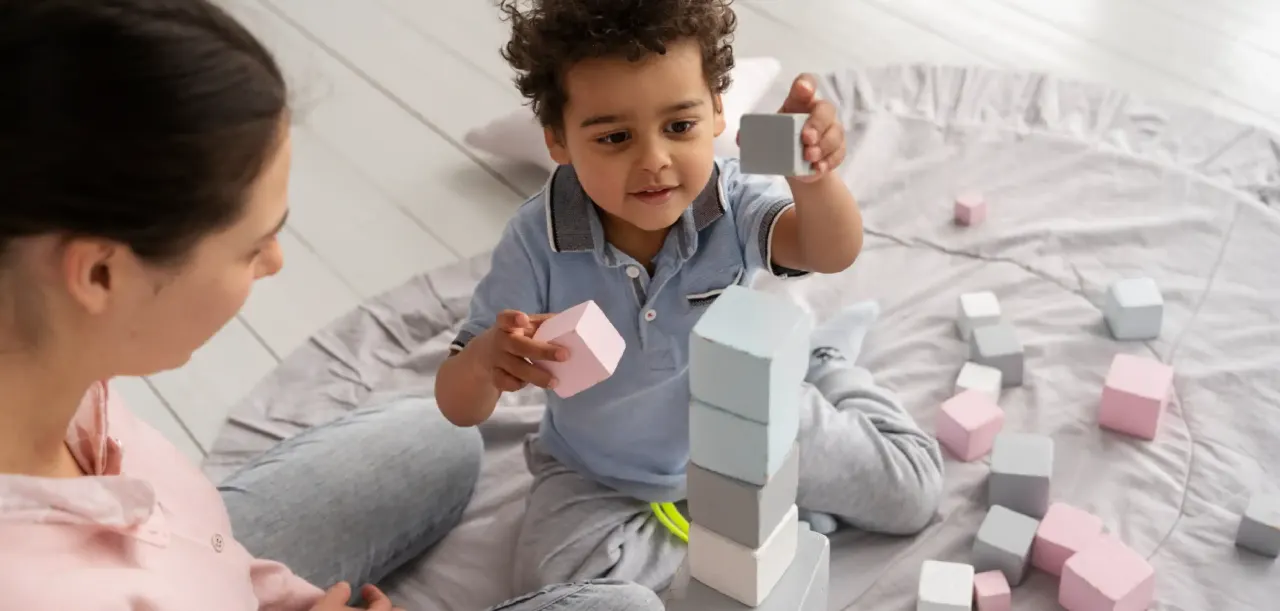
Simple toys and everyday items encourage imagination and exploration. A caregiver’s presence, voice, and responsiveness matter far more than features or technology.
Overstimulating toys can sometimes reduce creativity by doing too much for the child. Simple play invites the baby to participate actively rather than passively.
The role of repetition in play
Babies often want to repeat the same activity again and again. This repetition is not boredom. It is learning.
Repetition strengthens neural pathways, helping the brain move from effortful learning to mastery. Each repetition adds a new layer of understanding, even if it looks identical to an adult observer.
Allowing repetition supports patience, focus, and confidence.
Play across different ages
Play evolves as the child grows, but its importance remains constant.
In early infancy, play is sensory and relational. In later infancy, it becomes more exploratory. In toddlerhood, pretend play and problem-solving begin to emerge.
At every stage, play supports development in age-appropriate ways. There is no need to rush children into advanced activities. Development unfolds naturally when play is allowed.
Play does not require constant instruction
One common mistake is turning play into teaching.
When adults constantly direct, correct, or test during play, the experience can lose its natural flow. Babies and toddlers learn best when they feel free to explore within safe boundaries.
Following the child’s lead during play builds confidence and curiosity. Gentle guidance can be offered without taking control.
Play and attention span
Contrary to common belief, structured activities are not necessary to build attention in young children. Free, responsive play actually supports longer attention spans over time.
When children are deeply engaged in play they enjoy, their ability to focus increases naturally.
Play and stress regulation
Play helps regulate stress in both babies and caregivers.
Joyful interaction releases calming chemicals in the brain, supporting emotional balance. During play, children learn to handle small challenges and frustrations in a safe context, building resilience.
This ability to cope with stress begins in early playful experiences.
The caregiver’s role in play
You do not need to be a perfect playmate. Presence matters more than performance.
Your role is to:
- Be emotionally available
- Respond to cues
- Offer safety and encouragement
- Enjoy the interaction
Even short moments of focused, responsive play have a powerful impact.
Letting go of pressure and comparison
Every child plays differently. Some are active, others observant. Some engage quickly, others take time.
Comparing play skills or milestones often creates unnecessary worry. Development is shaped by many factors, and variation is normal.
Trust that your child’s brain is growing through everyday experiences.
A grounded reminder
Play is not an extra activity added to childhood. It is the way childhood works.
Through play, babies learn how to think, feel, relate, and grow. They do not need perfection, constant stimulation, or structured programs. They need connection, safety, and freedom to explore.
When you play with your child, you are not just passing time. You are helping shape their brain, their confidence, and their relationship with the world.
In the simplest moments of play, lifelong learning quietly begins.